
 Did you know that 80% of all individuals suffer from low back pain at some point in their lives? At times, the cause can be a specific injury. In other cases, the cause cannot be accurately determined. Low back pain is the second most common reason for a visit to the doctor's office (the first is upper respiratory tract infections).
What Causes Low Back Pain?
The spine is a complex structure made up of bones, joints, ligaments and muscles. It can be injured in several ways. It’s possible to sprain ligaments, muscles or get a bulging or herniated disc. These are just some of the factors that can lead to low back pain. There can be times when the simplest movement (bending down to pick up a pencil from the floor, picking up your child) can lead to severe pain.Will My Back Heal Itself?
 Unlike muscles and bone, the lower back is a complex part of the body that does NOT "heal" on its own. It is critical to identify the underlying cause (which is where we help you) so that you can get long lasting relief.
The persistence of low back pain was revealed in a study by Hestbaek and colleagues in 2003. The study revealed that back pain lasted longer than 30 days for over 33% of people who experienced low back pain. Also, very few people (9% to be exact) with low back pain remained pain free after 5 years.
This highlights the importance of an evaluation from a licensed physical therapist, which is exactly where we come in to help you.

Persistent, chronic pain is more than just an inconvenience. It can make daily activities painfully challenging and limit your ability to do the things you enjoy. You may find it difficult to play with your children and complete tasks at home or work. Pain can also confine you to staying indoors. It can substantially limit your social life.
That’s not all. Many individuals cut back on physical activity. This leads to muscle weakness, which causes more pain and weakness. This triggers a vicious cycle that grows worse with each passing day.
Your physical therapist can help you break this painful cycle! In most cases, we can help individuals with long-lasting back pain feel improvement shortly after starting physical therapy.
If your back pain is not resolving quickly, call us today.
Can I Prevent My Back Pain From Returning? Here are some tips from our physical therapists to keep your spine healthy and pain-free:
 When lifting an object, bend at your knees, not your back. Be sure to squat with the correct technique to pick up an object. Keep your back straight and keep the object close to your body.
- Avoid twisting your body while lifting anything.
- When sitting, make sure your feet are flat on the floor and your back is straight.
- Avoid sitting for long periods of time. If you must, make sure to stand up and stretch frequently.
- The right footwear can protect your spine. Flats or low heels are safer than heels.
- Avoid sitting on the couch for too long, since it de-conditions the muscles surrounding your spine.
- Exercise regularly. Increasing muscle strength with the right exercises (which we can teach you) will minimize pain and injury.
 Don’t neglect your low back, even if you are pain free. We can teach you several preventative exercises and conduct a postural evaluation to determine if you may be at risk for back pain.
What are you waiting for? Schedule an appointment with us today so we can show you how to protect your spine. It’s time to get you 'back' to pain-free living.
New guidelines for COPD diagnosis, management
Publish date: Aug 19, 2011
The American College of Physicians (ACP), American College of Chest Physicians (ACCP), American Thoracic Society (ACT), and the European Respiratory Society (ERS) have issued updated recommendations to the 2007 ACP clinical practice guideline on diagnosis and management of stable chronic obstructive pulmonary disease (COPD). The new recommendations were published in Annals of Internal Medicine.
The updated guidelines, which are based on a targeted literature update from March 2007 to December 2009, are intended for clinicians who manage patients with COPD. The update addresses the value of history and physical examination for predicting airflow obstruction; the value of spirometry for screening or diagnosis of COPD; and COPD management strategies, specifically evaluation of various inhaled therapies (anticholinergics, long-acting beta-agonists, and corticosteroids), pulmonary rehabilitation programs, and supplemental oxygen therapy.
The updated clinical practice guidelines include the following recommendations:
1. ACP, ACCP, ATS, and ERS recommend that spirometry should be obtained to diagnose airflow obstruction in patients with respiratory symptoms.
ACP, ACCP, ATS, and ERS recommend that spirometry should not be used to screen for airflow obstruction in individuals without respiratory symptoms.
2. For stable COPD patients with respiratory symptoms and FEV1 (forced expiratory volume in 1 second) between 60% and 80% predicted, ACP, ACCP, ATS, and ERS suggest that treatment with inhaled bronchodilators may be used.
3. For stable COPD patients with respiratory symptoms and FEV1 less than 60% predicted, ACP, ACCP, ATS, and ERS recommend treatment with inhaled bronchodilators.
4. ACP, ACCP, ATS, and ERS recommend that clinicians prescribe monotherapy using either long-acting inhaled anticholinergics or long-acting inhaled beta agonists for symptomatic patients with COPD and FEV1 less than 60% predicted. Clinicians should base the choice of specific monotherapy on patient preference, cost, and adverse effect profile.
5. ACP, ACCP, ATS, and ERS suggest that clinicians may administer combination inhaled therapies (long acting inhaled anticholinergics, long-acting inhaled beta agonists, or inhaled corticosteroids) for symptomatic patients with stable COPD and FEV1 less than 60% predicted.
6. ACP, ACCP, ATS, and ERS recommend that clinicians should prescribe pulmonary rehabilitation for symptomatic patients with an FEV1 less than 50% predicted. Clinicians may consider pulmonary rehabilitation for symptomatic or exercise-limited patients with an FEV1 greater than 50% predicted.
7. ACP, ACCP, ATS, and ERS recommend that clinicians should prescribe continuous oxygen therapy in patients with COPD who have severe resting hypoxemia.
ACP, ACCP, ATS, and ERS recommend that spirometry should not be used to screen for airflow obstruction in individuals without respiratory symptoms.
2. For stable COPD patients with respiratory symptoms and FEV1 (forced expiratory volume in 1 second) between 60% and 80% predicted, ACP, ACCP, ATS, and ERS suggest that treatment with inhaled bronchodilators may be used.
3. For stable COPD patients with respiratory symptoms and FEV1 less than 60% predicted, ACP, ACCP, ATS, and ERS recommend treatment with inhaled bronchodilators.
4. ACP, ACCP, ATS, and ERS recommend that clinicians prescribe monotherapy using either long-acting inhaled anticholinergics or long-acting inhaled beta agonists for symptomatic patients with COPD and FEV1 less than 60% predicted. Clinicians should base the choice of specific monotherapy on patient preference, cost, and adverse effect profile.
5. ACP, ACCP, ATS, and ERS suggest that clinicians may administer combination inhaled therapies (long acting inhaled anticholinergics, long-acting inhaled beta agonists, or inhaled corticosteroids) for symptomatic patients with stable COPD and FEV1 less than 60% predicted.
6. ACP, ACCP, ATS, and ERS recommend that clinicians should prescribe pulmonary rehabilitation for symptomatic patients with an FEV1 less than 50% predicted. Clinicians may consider pulmonary rehabilitation for symptomatic or exercise-limited patients with an FEV1 greater than 50% predicted.
7. ACP, ACCP, ATS, and ERS recommend that clinicians should prescribe continuous oxygen therapy in patients with COPD who have severe resting hypoxemia.
“This clinical practice guideline aims to help clinicians to diagnose and manage stable COPD, prevent and treat exacerbations, reduce hospitalizations and deaths, and improve the quality of life of patients with COPD,” said lead author Amir Qaseem, MD, FACP, PhD, director of clinical policy, ACIP, in a press release. “It is important for patients with COPD to stop smoking and for physicians to help their patients to quit smoking.”
Source: ModernMedicine.com
Doctor Spotlight - Joel Brook, DPM - Dallas Podiatry Works - Plano and Dallas
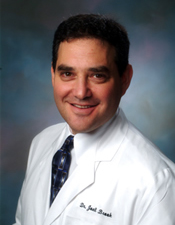

Dr. Brook earned his bachelor's degree in Biology from Vassar College in 1983. In 1984, he graduated from Columbia University with his master's in Human Nutrition and went on to earn a doctorate in Podiatric Medicine from Temple University College of Podiatric Medicine in 1995.
Dr. Brook's hospital affiliations include:
- Medical City of Dallas
- Baylor Regional Medical Center of Plano
- North Central Surgery Center
Dr. Brook is a Diplomat of the American Board of Podiatric Surgery, and is board certified in both Foot Surgery and Reconstructive Rearfoot and Ankle Surgery. He was chief resident in the Department of Surgery, Division of Podiatric Surgery, at Mount Sinai Medical Center in Cleveland, Ohio. Dr. Brook is also a member of the American College of Foot and Ankle Surgeons, American Podiatric Medical Association, Texas Podiatric Medical Association and American Diabetes Association.
An avid lecturer to both the medical and lay community, Dr. Brook has lectured on topics including The Pediatric Flatfoot, Pediatric Foot Pain, Charcot Arthropathy, The Spectrum of Heel Pain, Evaluation of the Diabetic Foot, Management of Puncture Wounds and A Woman's Guide to Painful Feet and Bunion Surgery. Dr. Brook has conducted extensive research and published 10 articles in several prominent clinical journals. He has received many honors and awards for his work.
Dr. Brook has served on the infection control, ethics and executive committee of the ambulatory surgery center at Medical City, and was chairman of the Podiatric Surgery section at Medical City Dallas Hospital from 2001-2007. Dr. Brook was votedBest Doctor in D Magazine again.
Dr. Brook is married with three children, is active in community affairs, enjoys skiing, biking and is an avid woodworker.
If you are a physician or practitioner and would like to learn more about being featured in this newsletter, contact us at info@assuredrehab.com

No comments:
Post a Comment
Note: Only a member of this blog may post a comment.